
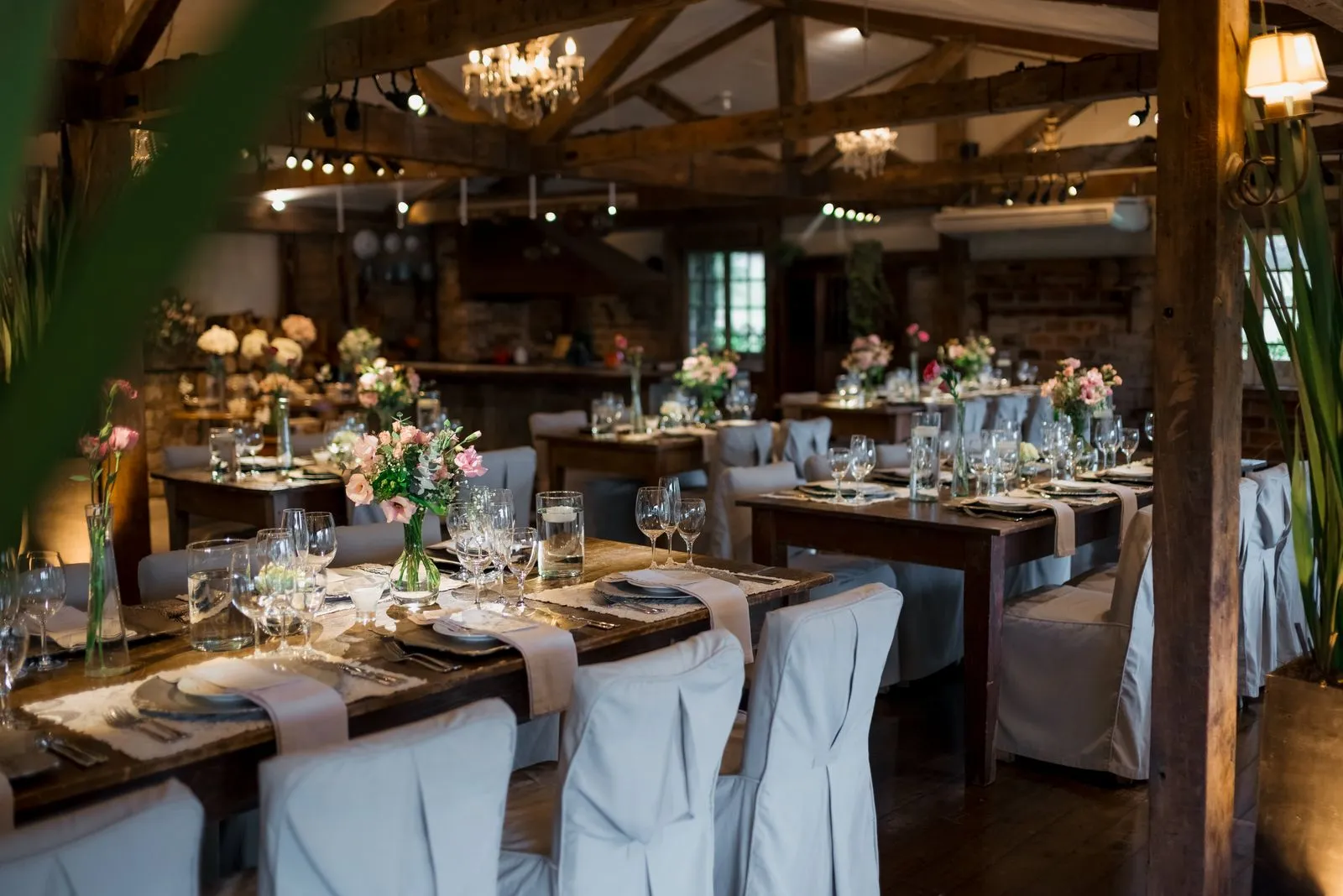
Wedding linens and place settings work best when they feel connected without matching exactly. Start with the mood and colors of your reception, then choose fabrics and tableware that support that direction. A clear plan also helps you avoid visual clutter and last-minute rental changes. Whether your tables are formal or relaxed, these steps can help you create a cohesive tablescape that looks inviting and gives guests the space they need to dine comfortably.
Choose a Color Foundation
Begin with one dominant linen color, usually the tablecloth or runner, and build the rest of the palette around it. Consider your venue’s existing colors, floral design, and lighting before choosing a shade. Warm ivory, crisp white, and soft neutrals create a flexible base, while deeper colors can add drama. Request fabric samples when possible and view them in the room or under similar lighting.
Limit the table palette to a few related colors so the place settings remain easy to read. Use napkins, menus, or chargers to introduce a supporting shade rather than adding a new color to every item. If your flowers are vibrant, choose quieter linens. If the florals are mostly white or green, a colored napkin or patterned runner can provide definition without competing.
Balance Texture and Pattern
Texture adds depth even when you use a restrained palette. Pair a smooth tablecloth with a softly woven napkin, or combine a matte linen with polished flatware. Keep the contrast intentional: one noticeable texture can make a table feel considered, while several competing textures may make it feel busy. Check how each fabric drapes and whether it suits the formality of the event.
Treat patterns as accents. A patterned runner or napkin can work well with solid linens and simple dinnerware, but avoid placing multiple bold patterns next to one another. If you are mixing textures or prints, repeat a color or finish to tie them together. Lay out a sample place setting before confirming quantities, and check that the pattern remains visible alongside flowers and décor.
Coordinate the Tableware
Choose plates, glassware, and flatware that support the linen palette and the meal service. White or neutral dinnerware gives colorful linens room to stand out; colored or rimmed plates can add character to a quieter table. Match metal finishes where practical, especially across flatware, chargers, and other visible accents. You do not need every item to be identical, but repeated finishes help the setting feel intentional.
Plan each place setting around the actual menu and service style. Confirm the needed plates, utensils, and glasses with your caterer, then remove pieces guests will not use. Make sure there is enough room between settings for guests to eat comfortably. Check that napkins, menus, and place cards do not cover the dinnerware or crowd the table’s center.
Test the Full Tablescape
Review a complete sample table before finalizing your rentals. Include the linen, napkin, dinnerware, glassware, flatware, centerpiece, and stationery. Look at the setup from a guest’s seat as well as from across the room. This reveals color clashes, awkward spacing, and items that disappear against the background. Take photos in the venue’s lighting so you can compare options accurately.
Confirm practical details alongside the design. Check table dimensions, linen drop, stain or care requirements, delivery timing, and who will set and collect rental items. Keep a written list of selected colors, quantities, and finishes to share with your planner, caterer, and rental provider. Mile High Table Co. can help Denver couples review rental options for their reception layout.
A cohesive tablescape comes from a few deliberate choices: a clear color foundation, balanced texture, coordinated tableware, and a full-scale review. Prioritize guest comfort as you refine the look, and confirm every item against your floor plan and meal service. When you are ready to compare rental options, contact a local provider to discuss your tables and design plan.